
Why “The Lost Generation” is a Lost Opportunity
The Problem with Jacob Savage's Viral Article on Millennial White Men.

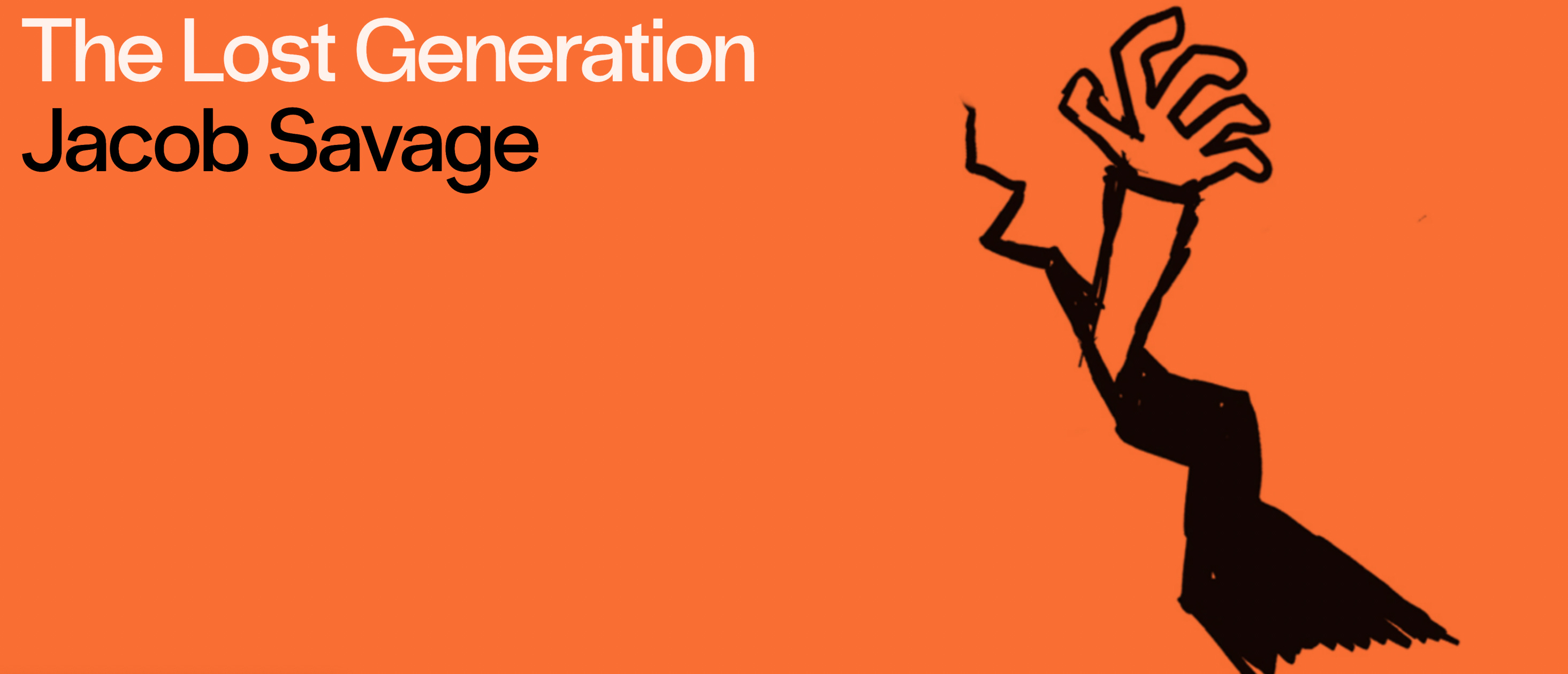
Jacob Savage’s just-released article in Compact, “The Lost Generation,” has generated huge buzz online, with some calling it the article of the year and well-known commentators such as Abigail Shrier calling it “the single best long-form piece I have read in a very long time.”
At first blush it is easy to see reasons for their enthusiasm. Savage writes compellingly and examines in exhaustive detail and with many references to his personal story, the dispossession of and discrimination against young white men that has rapidly accelerated over much of the last decade or so.
As someone who has spent a great deal of time during that same era writing and talking about the subject of anti-White racism and highlighting data and anecdotes similar to those the author has unearthed, most particularly in my book The Unprotected Class: How Anti-White Racism is Tearing America Apart, you might expect me to be a huge proponent of the piece. But while there is much to recommend it, there are also large blind spots that impede the author’s analysis. And the fact that this particular piece has so grabbed public attention despite its glaring flaws indicates that the right is still not having the sort of discussion on race that we need to have.
First, let’s give Savage his due. He has done his research and the data he cites is striking: From prestige media to elite universities to Hollywood, there is compelling statistical and anecdotal evidence of severe discrimination against White men, in particular against millennial Whites. But this is only part of the story.
The author’s biography is a compelling example of his generation’s misfortune. At 41 years old, a Princeton grad, who had his career blocked as a Hollywood writer by being in the wrong demographic at the wrong time, he, by his own admission, makes a living scalping tickets, hardly the glamorous sort of job he might have expected with a top Ivy League degree in hand. Savage makes a compelling case that Gen X and Boomer White men are the villains of the story, people who were able to still get jobs and get established before the door closed on our millennial brothers.
There is some truth to this. When I attended Yale in the mid-1990s, while anti-white discrimination was already in full swing (something Savage underplays), it had not become the overwhelming force that it would become in more recent years. Young White men absolutely faced discrimination thirty years ago—but not to such an extent that there were not opportunities available to us if we had the right skills and credentials.
Nonetheless, throughout Savage’s piece there is a whiff of the old Internet meme: “’I never thought leopards would eat MY face,’ sobs woman who voted for the Leopards Eating People’s Faces Party.” Because even now, Savage seems to respect and to some extent even revere the very institutions that have spit on him and his White male millennial comrades. And his tendency to focus on the experience of himself and his friends means that he puts the spotlight solely on millennials— but as many others have said— (and his own data show!) Zoomers arguably have it just as bad or worse.
His is the lament of the intellectual dark web (IDW) —the so-called “homeless liberals” —people who at some level still believe in the elite system and refuse to give up that belief even in the wake of overwhelming evidence that it has betrayed them. But it is far from clear that such a belief is either clear-headed or admirable. Savage and his subjects can be quite self-critical at times, but at others they seem to shrink back from acting on the logical conclusions of their observations. Savage, like his IDW contemporaries, seems content to fish in the Rubicon rather than to cross it and travel to terrain that would mark him to the establishment not just as a critic but as an enemy.

Furthermore, his framing of this as something new shows a major blind spot with respect to the travails of earlier generations of White working class men, who had their blue-collar jobs shipped overseas and who were chased from their neighborhoods decades before—while the forerunners of the “creative class” whites whose current plight he ably describes, did nothing to stop their dispossession. Indeed, they were often the authors of it. For these working class Whites, the tragedy started decades ago, not in 2014.
Indeed, Savage’s story, and this to me is its principal weakness, is not really so much about the plight of White men but White establishment liberal men, something he implicitly acknowledges at a couple of different points in the piece. But for *conservative* White men, the gig was up far earlier than a decade ago. There were many reasons, for example, that I left my doctoral program at Stanford University in the late 2000s, many years before the alleged crisis that Savage describes. But arguably chief among them was that it became clear to me that even in my relatively less political field of study, as someone who was quite capable, but not a certified genius, there was simply no place in academia for me that would not require me to fundamentally compromise my principles. Indeed, had my own intellect and courage been in greater supply, that was really something I could have determined before even applying to Stanford in the mid-2000s.
I claim no special honor here—many braver and higher-integrity White men than I were drummed out of “polite” professional society years before I was because they stood up to the institutional left rather than, like the men that Savage profiles, sucked up to it. In contrast, the people Savage interviews people are usually just as much part of the problem as part of the solution.
One interviewee, “Andrew” who worked as a journalist commented that “I had credibility as somebody who had come from a more left-leaning perspective, was well sourced on the left, but was willing to give them a kick in the teeth every now and then.” In other words, he would rock the boat a bit on occasion, but always from a safe insider’s perspective. It was only when Andrew’s employer began “impeding [my] advancement” that his broader concern was activated.
Savage notes that even the few White men who somehow run the gauntlet and survive in the current elite cultural establishment are mostly distinguished by their ability to shout the left-wing Anti-White party slogans even louder than their POC fellows.
He quotes a Gen X reporter: “I imagine one reason newsrooms have gotten more explicitly lefty is that you have white guys and white women adopting a kind of protective coloration, allyship mindset, to get through the door.”
Yes, the old liberal white men who ran things at these elite institutions were loathsome, protecting their status and perquisites while mouthing platitudes about diversity. But most of those few Whites who “make it” in junior roles today are just as terrible.
Savage’s piece, of course, wouldn’t be complete without lots of commentary from cowardly White academics. “There are many stories we tell ourselves about race and gender, especially in academia. But the one thing everyone I spoke to seemed to agree on is it’s best not to talk about it, at least not in public, at least not with your name attached,” Savage writes.
And the numbers he compiles are damning. Since 2018, just 6 out of 76 (7.9 percent) of junior hires in the Humanities at Yale went to White American men. Since 2022, Brown has had similar numbers (just 3 of 45 new junior hires in humanities and social sciences since 2022 are White American men.) And we see similar numbers at other schools.
Savage quotes one bitter young man in the film industry: “You’re crawling through broken glass and it’s still not enough. I kind of just choose to ignore it out of self-preservation, because if I’m bitter or angry then I’m even further away from what I want. Nobody wants the guy shaking his fist.”
Correct—as a longtime certified fist shaker, I can tell you that nobody in the establishment elite wants the guy shaking his fist. But for the last decade (at least) the world *needed* that guy. Not the guy who cowered in the corner like Savage’s interviewees in hopes that he could still be welcomed into an elite that despised people like him. In a profession like academia whose principal demand should be a relentless desire to tell the truth, none of the many academics Savage interviewed were brave enough to risk their careers to tell the truth about the anti-White racism they could see with their own eyes. Those of us who did are well aware of the price that was paid, a price that was higher because the silence of those “men” that Savage profiles who left us to face the hostile system alone.
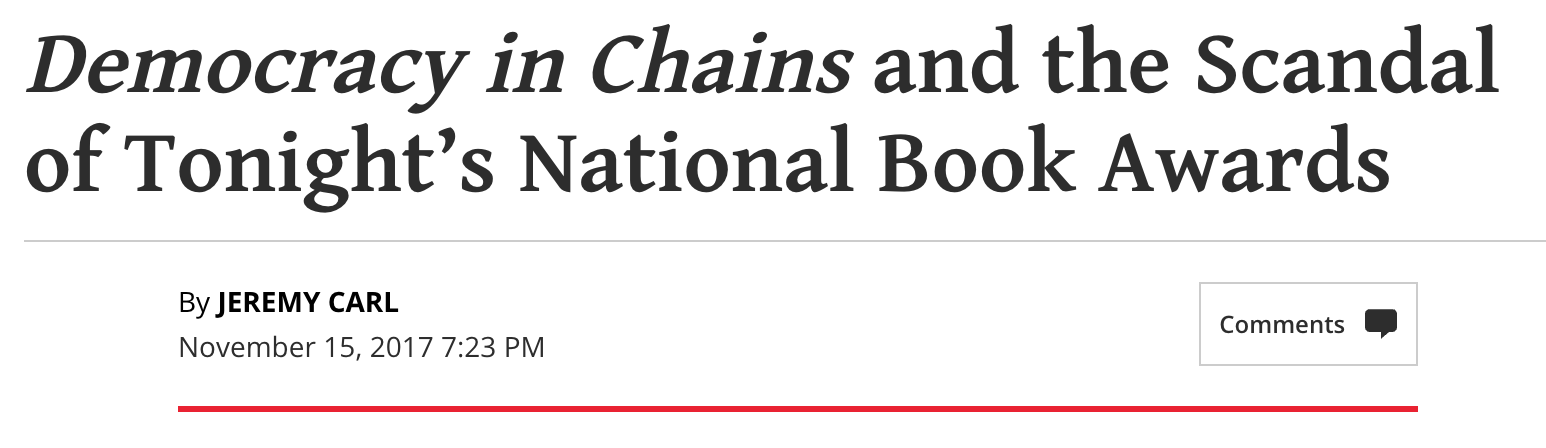
Savage ably documents how younger White males have also been frozen out of other elite programs such as MacArthur Genius Fellowships, National Book Awards, and Whitney Biennials, But, this is not a new revelation to anyone paying attention. For example, I was commenting on how the National Book Awards and other similar prizes had been radicalized and racialized, and were punishing white men all the way back in 2017. And there are numerous others like Heather Mac Donald who raised similar alarms even earlier.
Savage almost revels in the timidity and acquiescence of his elite-aspirant subjects: “Over the past two years I’ve spoken with dozens of white male millennials, excavating hopes and dreams, disappointments and resentments. To a man, they insisted on anonymity,” He writes. But while I have strongly defended the rights of anons on the Internet and elsewhere, the universal unwillingness to tell the truth under your own name—especially in prestige occupations that should most value it, is both an individual and a collective societal failure. Yes, the American revolutionary leaders wrote many pamphlets anonymously—but ultimately, when it came time to pledge their lives, fortunes and sacred honor, they did not shrink from doing so—nor did they hide their real names from those who would persecute them. That’s the spirit we should honor. Not the spirit of those who were afraid to speak up because they might lose their chances of joining the corrupt elite.
“Most of the men I interviewed started out as liberals. Some still are.” Savage informs us, with a sense that he is not the least bit horrified by this statement. But given the abject racial and sex discrimination they have suffered, why would any of these men subscribe to liberalism if they have any self-respect?
Because the alternative for many of these aspiring elites, to have to acknowledge a sympathy and kinship with the hated Red State American such as my Montana neighbors who cling to their guns and religion, is even more loathsome to them than being treated as a second class (at best) citizen by liberals. The Trump administration and the conservative movement desperately could use the talents of folks like Savage and those he profiles—but, as is typical of the IDW and their “moderate”allies, to actually suffer the indignity of joining the right in a political struggle against the left is a bridge too far for these men.
“What troubles me is that a lot of thriving white millennial men have had to follow the Josh Hawley [A conservative Senator from Missouri who graduated from Stanford and Yale Law] path, where you have to leave liberal America. . . I don’t want to do that. Liberal America is my home. But if everyone says, this is not the place for you, what are you supposed to do?” says one interviewee.
I’ll tell him what he should do.
BE A FREAKING MAN.
STAND UP FOR HIMSELF—THAT’S WHAT HE SHOUD DO.
He should tell the people who discriminated against him for his skin color and sex in no uncertain terms that they are not his people, and that what they are doing is deeply immoral and wrong. And if that means getting nasty glares from some in his blue neighborhood when he walks to get his soy matcha latte, that’s a price he has to pay.
Sorry, I didn’t make the rules.
Savage says he isn’t angry with the people who took opportunities that should have rightly been his. But a basic sense of self-respect demands that he should be angry. And he should turn that anger into something productive. He should turn that anger into fuel.
There are many good things in Savage’s article, and I always welcome it when anyone shines a fresh spotlight on the discrimination against White men that has been going on for years. And to the extent he opens up some eyes that are not already opened as to the reality of the discrimination that young White men are facing in 2025, I give a hearty two cheers for him. But neither Savage nor his piece are yet deserving of a third.
The establishment that denied opportunities to Savage and his millennial and Gen Z White male cohort are not, as Savage seemingly implies, basically good people who unfortunately had the single moral or intellectual flaw that they happened to discriminate against White men. They are horrible people, people who are totally unworthy of controlling the commanding heights of our society. They are moral monsters, racists, sexists, and intellectual cowards. And they, and the corrupt institutions that they have run for decades, must be either reformed completely with their incumbent leadership ousted—or else destroyed.
Savage has done a real service by thoroughly documenting, with the latest data, just how detestably hostile to young White men our so-called “elite” institutions have become. But until he and the fellow White male “moderates” and IDW camp followers he profiles rid themselves of their deadly desire to make excuses for their abusers, they will unfortunately be of limited help in solving the problems Savage so ably outlines.
Facts and data are wonderful things, but courage and conviction are more important still.
And even his the article’s final sentences are timid questions rather than confident declarations.

If the trumpet gives an uncertain sound, who shall prepare himself to the battle?